Chabot College Persister Study: Fall 1998
Support that helps students stay in college
|
The study
|
The focus groups
|
| The Fall 1998 Persister Study sought to understand what motivates students to persist and stay in college and to identify their major obstacles and sources of support. Focus groups in 15 classes and a written survey in 40 classes produced data from continuing (including returning & transfer) students. | The focus groups provided moving testimonies by students about the importance of their education at Chabot, what they go through to remain here, and how Chabot does or does not help them stay. Most students had a very strong commitment to long-term educational goals and an inner motivation that got them to campus each day and each semester. However, they also received very tangible emotional and financial support from their parents, spouse, or family in order to stay in college. Many of those living with their parents were able to work fewer hours or not at all so they could concentrate on their studies. Some working students were lucky enough to find the ideal solution—a part-time job with high pay. Athletes and those in technical/vocational or performance courses were also motivated to persist by their enjoyment of the activities and by the discipline required to participate in those areas. Most students also received crucial support from Chabot instructors, counselors, and other staff. |
|
The classroom survey
|
|
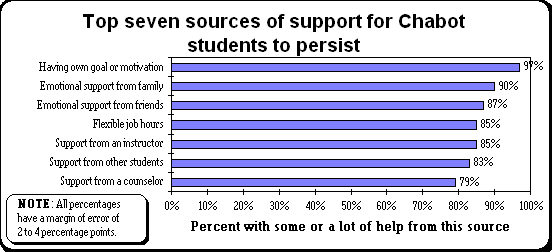
| The classroom survey confirmed that the major sources of support were students' own goal or motivation, support from family and friends, flexible job hours, and encouragement from instructors and counselors. These factors were important for 80% or more of persisters. In addition, Chabot's student services such as counseling, study skills classes, tutoring, and orientation sessions/courses helped over half of the students to stay in college. Being involved in a department, a program, student activities, or having a job on campus also helped. |
|
Sources of support for
Chabot students to stay in college: Financial and non-financial
|
|||||
| Types of non-financial support | Percent with some or a lot of help from this type | Types of Expenses | Who pays for the expenses? | ||
| Self/spouse | Parents | Fin Aid/Other | |||
| Having a goal or own self motivation | 97% | ||||
| Emotional support/pressure from family to finish | 90% | Living expenses | (Adds to 100% across) | ||
| Emotional support/pressure from friends to finish | 87% | Housing | 40% | 51% | 8% |
| Flexible job hours that fit around courses | 85% | Food | 47% | 47% | 6% |
| Encouragement or support from an instructor | 85% | Transportation | 66% | 28% | 6% |
| Encouragement or support from other students | 83% | Childcare | 61% | 21% | 18% |
| Encouragement or support from a counselor | 79% | Health care | 52% | 41% | 7% |
| Counseling (education, career, or personal) | 65% | Other living expenses | 70% | 24% | 6% |
| Study skills testing, classes, or workshops | 60% | ||||
| Tutoring: in tutoring center or computer labs | 59% | College expenses | |||
| Supportive atmosphere in my department | 57% | Enrollment/tuition fees | 44% | 29% | 27% |
| Orientation sessions/Psychology Counseling class | 57% | Books and supplies | 51% | 29% | 20% |
| Supportive atmosphere in my program or service | 52% | ||||
| A job on campus | 46% | ||||
| Student activities I do | 44% | ||||
